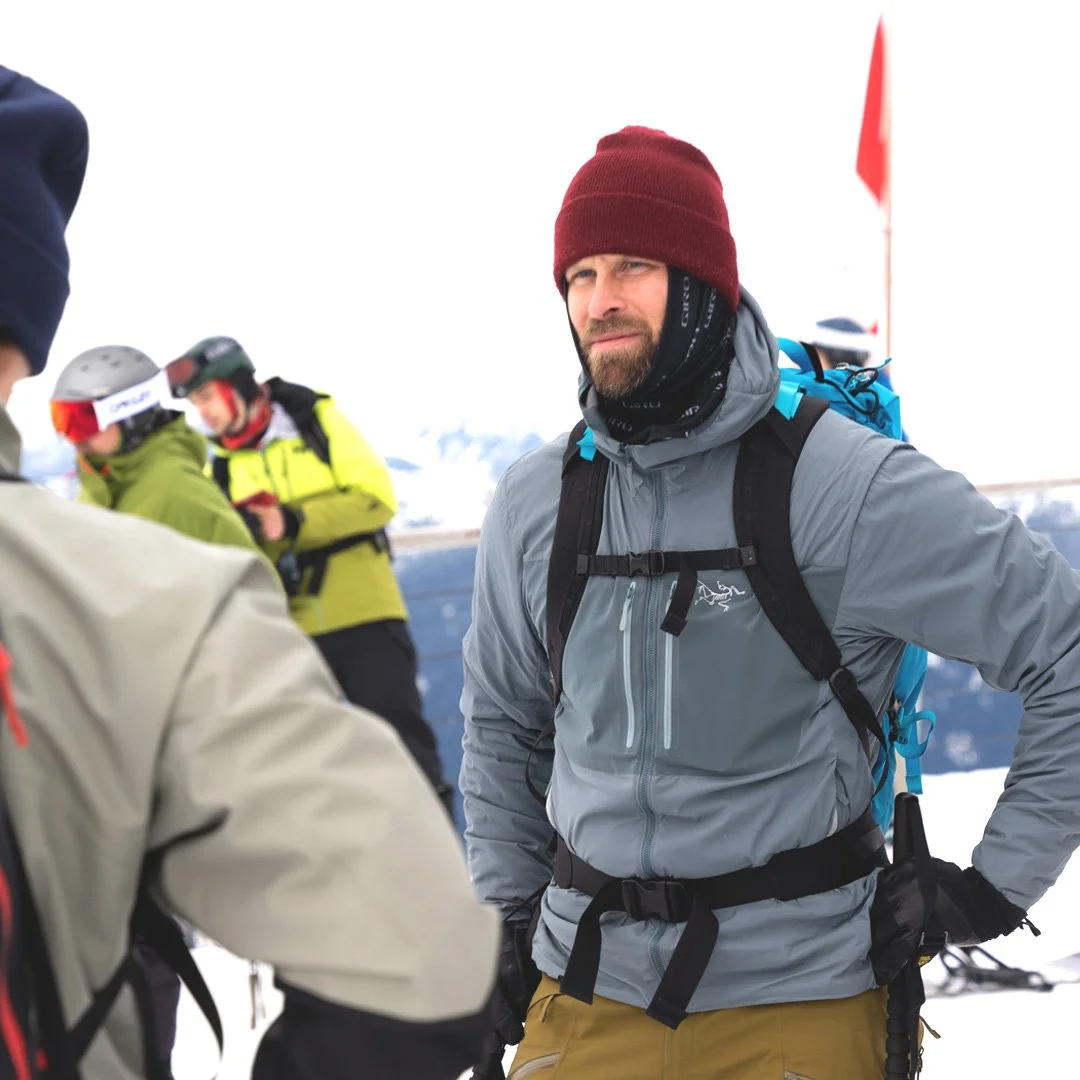
Creating Resilience for the Mountains with Morgen Funston
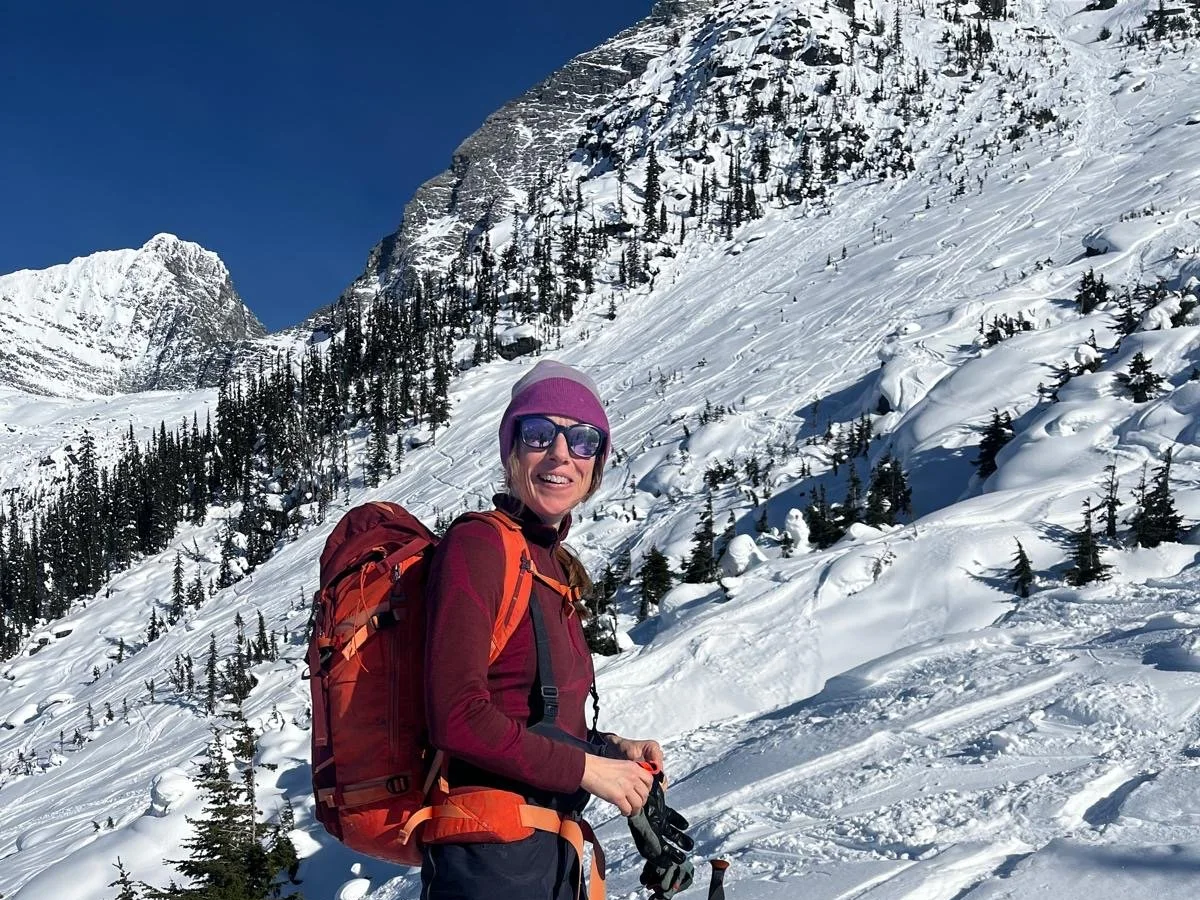
Morgen Funston at Home in the Hills
From Managing Pain to Building Capacity
Morgen came into the Ibex Project orbit about four months ago dealing with a chronic, stiff, painful shoulder. It had been lingering long enough that it was no longer just an annoyance. It was affecting her climbing and starting to cast a shadow over the coming ski guiding season.
For a mountain guide, that kind of uncertainty carries weight. Guiding is physical, repetitive, and unforgiving to compromised joints. You can tape, mobilize, and manage, but when pain starts influencing decision-making or movement quality, it chips away at confidence.
Like many guides balancing professional and family life, Morgen had spent the past several years pouring energy outward. Long days guiding. Logistics. Travel. Motherhood. Life. Structured strength and conditioning had slowly slipped to the margins.
Alongside the shoulder history sat something even more common in the guiding world: recurrent low back pain, general stiffness, and a creeping sense of reduced physical capacity while working.
Nothing catastrophic. No single injury event. Just the accumulated load of years spent carrying packs, managing clients, skiing variable snow, and moving in the mountains without a dedicated system to support the body doing the work.
And like many guides, she had begun to assume that was simply the way it would be.
From Rehab to Foundation
Our early work focused where you’d expect. We unpacked the shoulder. Movement quality, joint capacity, strength through range, scapular control, tissue tolerance. The goal wasn’t just to calm symptoms but to restore usable function she could trust while climbing and working overhead in the mountains.
What became clear quickly, though, was that the shoulder wasn’t the whole story. So we broadened our scope. Rather than staying narrowly focused on the shoulder, we expanded the lens toward full-body capacity building with ski guiding in mind.
The shift was subtle but important. This wasn’t rehab anymore. It was preparation. We’ve been building a base of muscular strength. Nothing flashy. Foundational work targeting lower body force production, trunk stiffness and control, posterior chain durability, and upper body strength that supported guiding tasks.
As that base developed, we layered in power. Ski guiding demands repeated submaximal outputs under fatigue. Short bursts. Direction changes. Snow variability. Pack weight. The ability to express strength quickly matters as much as possessing it.
All of this has been running alongside continued targeted work for the shoulder. Strength through range. Load tolerance. Overhead confidence.
Importantly, the program had to live inside the reality of Morgen’s life. She isn’t just a guide. She’s also a mother to a six-year-old. Time is finite. Training has to be efficient, purposeful, and sustainable. No junk volume. No performative suffering. Just targeted work that moved the needle.
Early Season Check-in
The real test of any program isn’t how it looks on paper. It’s how the body responds when the season starts.
Long days. Early mornings. Heavy packs. Variable snow. Client management. Cumulative fatigue.
That’s where we are now - mid season. And the early season feedback from the field has been the most meaningful metric.
Morgen is feeling strong on her bigger guiding days. Not just getting through them but finishing the days strong. Her shoulder, once the primary concern, has held up without issue. No guarding or compensatory movements. No post-day flare-ups pulling her back into management mode.
Equally significant has been the change in her back. The recurrent low-grade pain that had become expected background noise has quieted. She’s finishing days feeling worked but not aching.
Confidence in what her body is capable of has returned.
The Psychological Shift
When guides lose trust in their bodies, even slightly, it influences how they move, how they ski, and how they make decisions.
You might ski a line a touch more conservatively. You might avoid certain movements. You might feel fatigue earlier simply because your system is buffering around discomfort.
Rebuilding physical capacity rebuilds that trust. Morgen’s season isn’t just off to a strong start physically. Its started with a renewed sense of durability.
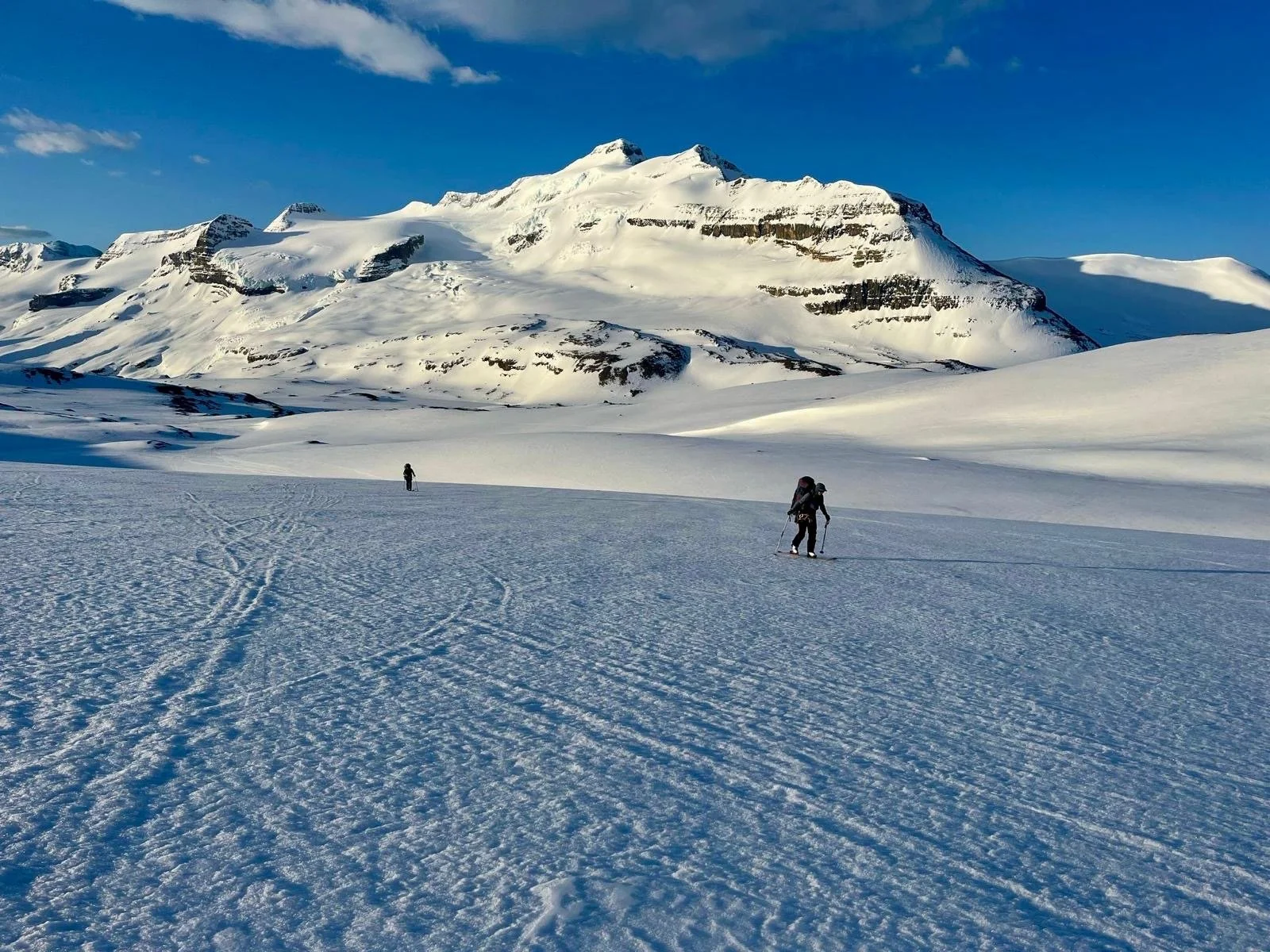
Wapta Traverse
A Familiar Story in the Guiding Community
What makes Morgen’s story resonate isn’t that it’s rare. It’s that it’s common. Many aging mountain athletes are operating below their physical potential not because they lack work ethic or resilience but because they’ve never had the time or structure to build and maintain their resilience and capacity.
Guiding and mountain recreation are often treated as the training itself. And to a degree, it is. But without intentional strength and power development in the off-season and shoulder seasons, many guides and mountain athletes can slowly drift toward that “manage it” zone. Not injured enough to stop. Not robust enough to feel their best. Add family life, travel, an old partially rehabbed injury and years in the field, and that drift accelerates.
Reframing Longevity in the Mountain
What’s been most rewarding in working with Morgen isn’t just symptom resolution. It’s watching the reframing happen in real time.
She’s no longer viewing stiffness, back pain, or reduced output as inevitable consequences of guiding and motherhood. She’s experiencing firsthand how quickly the body can respond when you invest in its capacity again.
Four months isn’t a long time in a career. But it’s enough time to change trajectory. Strength returns. Power returns. Pain recedes. Confidence grows. The best part is that these real gains continue to compound season over season and year over year of intentional training and body maintenance.
Where the Story Sits Now
We’re still early in the arc. The foundation has been built. The season is underway. The real long-term work is in sustaining and progressing that capacity across seasons so durability compounds rather than erodes. But the early signal is clear.
A shoulder that once threatened climbing and guiding is now a non-issue. A back that had become predictably sore is quiet. Big guiding days feel strong rather than draining. For Morgen, that shift has meant starting the season feeling like herself again.