
Not the Injured One: Carey Brown's Paragliding Crash and Rehab Journey
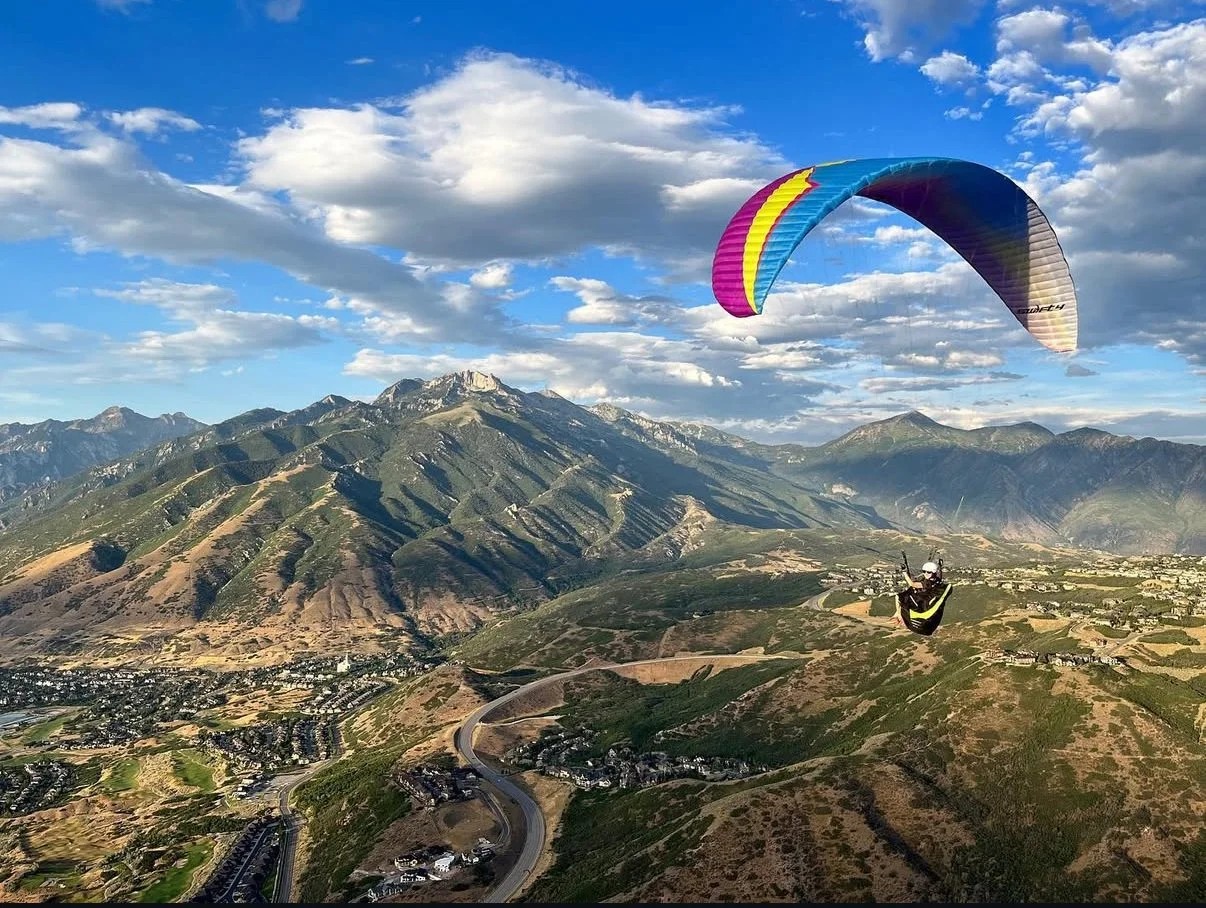
Carey Soaking up the Views
The Crash
On July 8, 2023, I was participating in a Simulation d’Incident en Vol (SIV) course, a safety training designed to simulate and recover from paragliding wing collapses.
Shortly after takeoff, about 30 feet off the ground, my wing experienced a roughly 50 percent collapse. Before I had time to respond, the system rotated and I impacted the beach.
Flying had shaped my life for years. I started paragliding in 2015 after about a year and a half of skydiving. It quickly became the thing that influenced where I lived, how I spent my time, and how I understood risk and freedom. It gave me an aliveness I hadn’t experienced.
That day, everything changed.
What Happened in the Air
These SIV courses take place over water and require launching via boat tow, similar to parasailing. I was flying a new, larger wing that required additional weight to fly optimally, so I was carrying about 28 pounds of water ballast in my harness.
We’re not fully sure what caused the collapse. Most likely it was a tension knot or snag during inflation. The added ballast increased the pendulum effect and accelerated the rotation.
My left foot took the primary impact. I sustained a severe Lisfranc injury with dislocations and a fractured talus. The force continued up my body, resulting in a spinal compression fracture and a fractured and dislocated wrist. I underwent two surgeries, one for my wrist and one for my foot, both more complex than expected.
Early Expectations vs Reality
Initially, I assumed recovery would follow a familiar timeline based on previous injuries. I expected to be walking by September and back to normal activity by November, maybe December.
That didn’t happen.
By November 2023, I was still walking with support and a boot. I had ongoing pain, nerve symptoms, and limited mobility. Imaging confirmed that multiple joints in my foot, talonavicular, tarsometatarsal, and subtalar, were no longer intact, meaning early arthritis was present.
Many athletes with Lisfranc injuries do not return to running. Joint fusion is a common path for pain management, but I chose to defer that option.
When Rehab Stalled
After my surgeries, I began physical therapy but struggled to progress. I experienced ongoing pain and functional limitations including reduced dorsiflexion, gait and balance changes, and secondary knee, hip, and low back issues. I was underweight and had lost significant muscle mass.
The rehabilitation approach I initially received was generalized and did not reflect the demands of mountain athletics or my athletic history. I stopped formal PT and began working independently, but motivation declined and I struggled with the loss of running as an outlet.
Summer 2024: A Turning Point
In the summer of 2024, I connected with Don at the Ibex Project through a mutual friend. This was a turning point.
Ibex focuses specifically on mountain athletes: people whose sports are seasonal, load-heavy, and often involve long days in unpredictable environments. Their model treats rehab as part of performance, not something separate from it.
Instead of working from a template, the program started with understanding me, my injury history, training background, lifestyle, and goals, and building a plan from there.
The goal wasn’t just to manage pain. It was to rebuild capacity and reduce future injury risk while returning to performance.
Everything was customized and progressed over time, with regular check-ins and tweaks based on how my body was responding.
Ibex’s approach is built around the idea that:
→ rehab is training in the presence of injury
→ the end goal is not baseline function
→ the goal is to perform again, often at a higher level than before
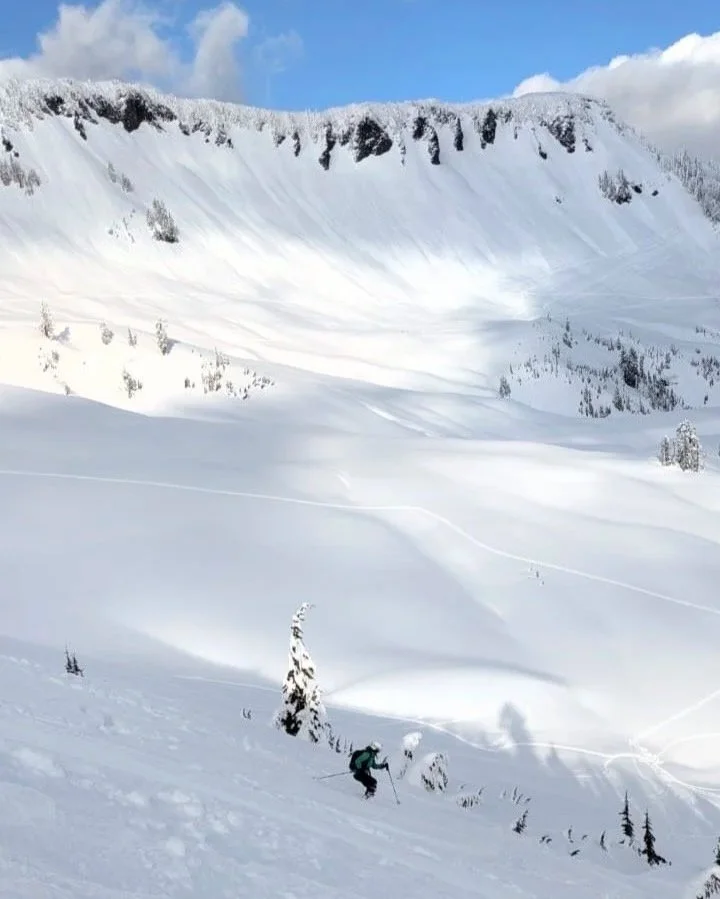
Making Turns in Big Terrain
Rebuilding Capacity
Over about seven months working with Don, I began to rebuild capacity.
I returned to running, eventually holding an eight-minute mile and building up to five miles. It wasn’t pain-free, but it was meaningful progress.
Ski touring became a major breakthrough. The structure of the ski boot stabilized my foot in a way that allowed me to perform without aggravating it, and I was able to tour for hours in the Baker backcountry.
Strength training, which I hadn’t emphasized before, became foundational. And I’ll humbly brag that I am a beast on the uphill, skis or bike.
By early 2025, I was back to consistent touring, riding, and training, including long 10+ mile hikes, bike packing, mountain biking, and long touring days on Mt. Baker.
November 2025: Another Surgery
In November 2025, I had hardware removed from my foot along with a debridement to remove scar tissue and nonviable tissue. The hardware had been contributing to Achilles tendonitis and plantar fasciitis.
Recovery from that surgery felt different right away. Within days I was weight-bearing comfortably. Two weeks later I was walking without the boot. The work I put in with Ibex supported a faster and better recovery from this surgery.
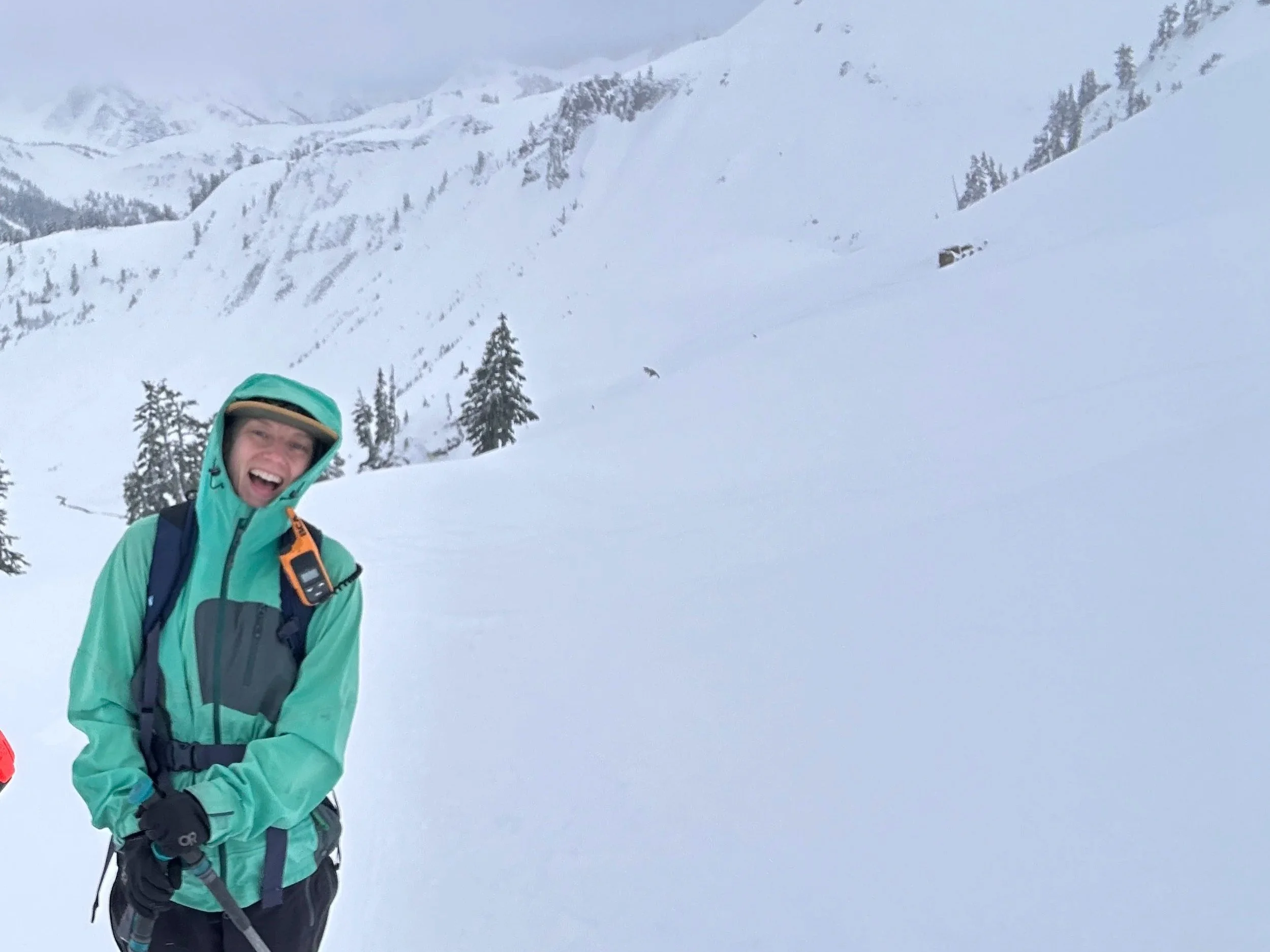
Psyched to be in the Hills
The Identity Shift
One of the harder parts of this process wasn’t just the physical recovery. It was the identity shift.
No one wants to be “the injured one.” You don’t want to be known for your accident. In a sport like paragliding, incidents can quietly raise the question of whether you’re a good pilot. It can feel like a marker on your back, especially as a female in the sport.
Accidents in paragliding can have serious consequences. People are permanently injured, and some don’t survive. I always knew that risk was part of flying. At the same time, you can’t be thinking about it constantly. Flying scared is its own kind of danger. The risk lives in the background as awareness, not fear.
Before the accident, I had a strong identity tied to flying. I used to say I’d fly into my 60s and dreamed of doing it around the world. I was a risk-averse pilot who progressed slowly and intentionally. Just before the accident, I felt like I was stepping into the next phase of my flying after years of consistency.
Afterward, I had to confront a difficult tradeoff: the possibility of losing my foot or long-term endurance capacity felt just as real as the possibility of never flying again.
In the immediate aftermath, I was angry, afraid, and in a lot of pain. For a while, I lost sight of who I was as an athlete, pilot, and person. The accident didn’t just change what I could physically do. It disrupted my sense of identity and altered the shape of my life in ways that extended far beyond the sport.
Moving Forward
My goals now look a little different than they did before the accident. Recovery didn’t mean returning to exactly who I was before, it meant building a new way forward. I’m focused on continuing to participate in the sports that matter to me over the long term safely and to have fun.
I still have limitations, including stiffness in the mornings and ongoing pain, but I’m back to participating in the activities that matter most.
At the start of 2024, I had decided to retire from paragliding due to reinjury risk. In September 2025, I flew again. I am writing this from Japan, having just summited Mt. Asahidake in Hokkaido.
Success for me now looks like being able to show up consistently, spending full days in the mountains, completing long tours, riding strong, and flying safely. More broadly, it means building a life that supports those things rather than assuming they’ll always be there by default.
Don and the Ibex Project have been a major part of my recovery. They helped shift my mindset from getting back to normal to building something that fits both the athlete I am now and the life that surrounds it.
That’s the path I’m building toward.